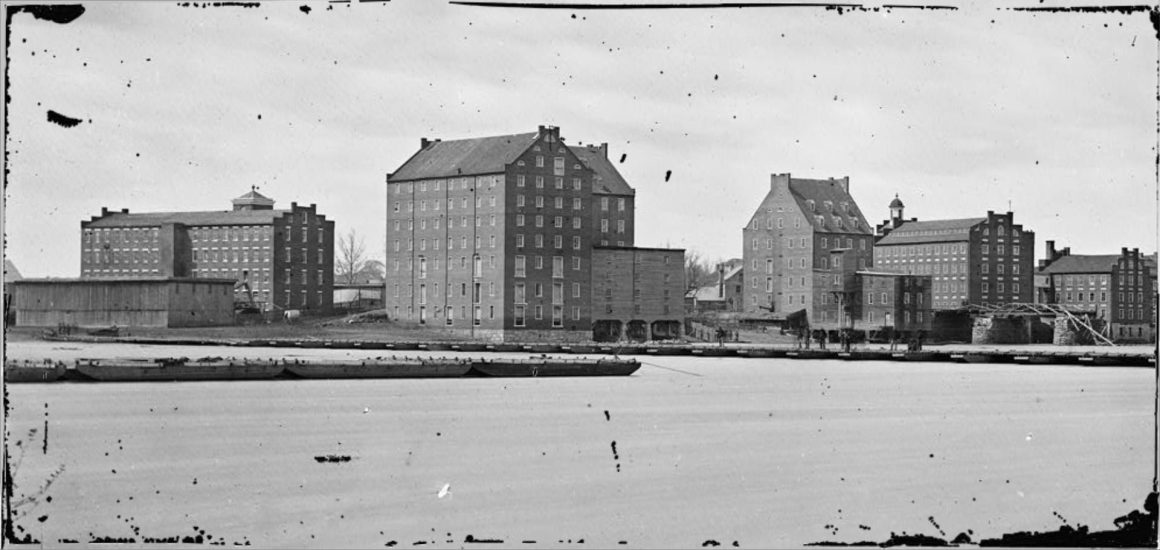
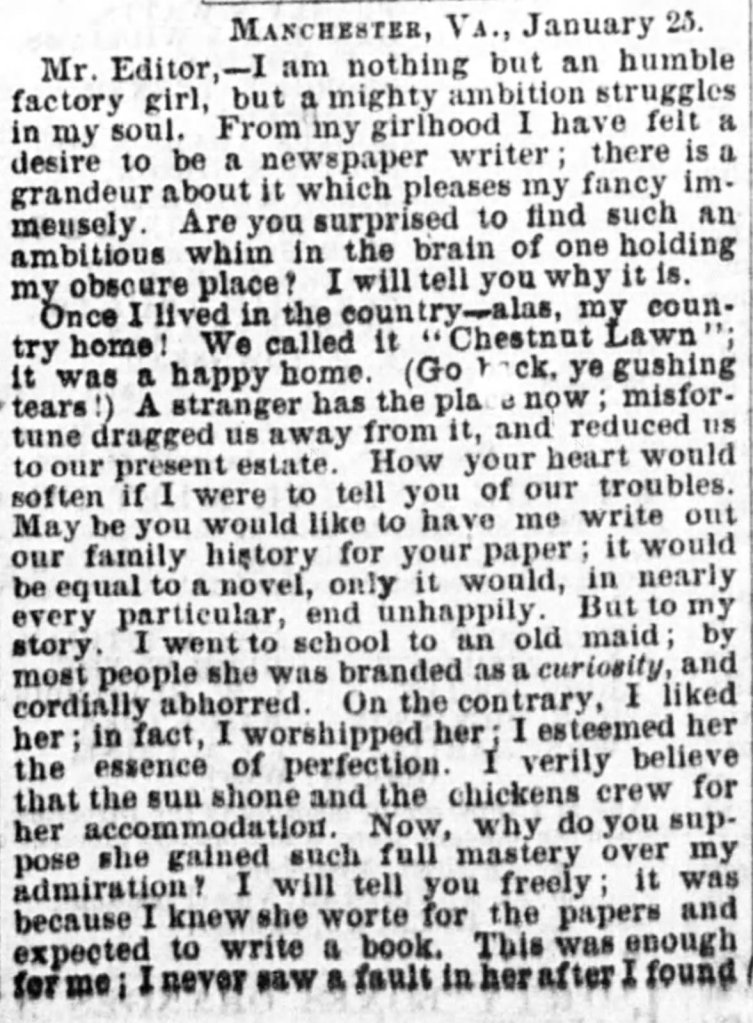
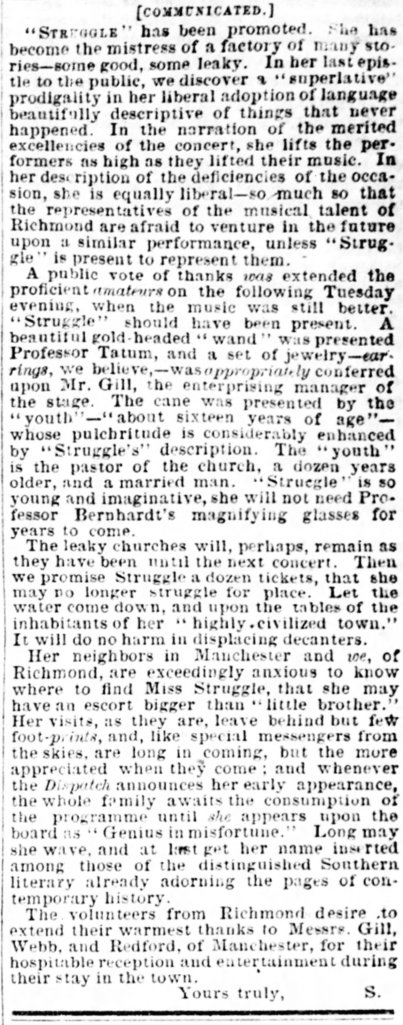
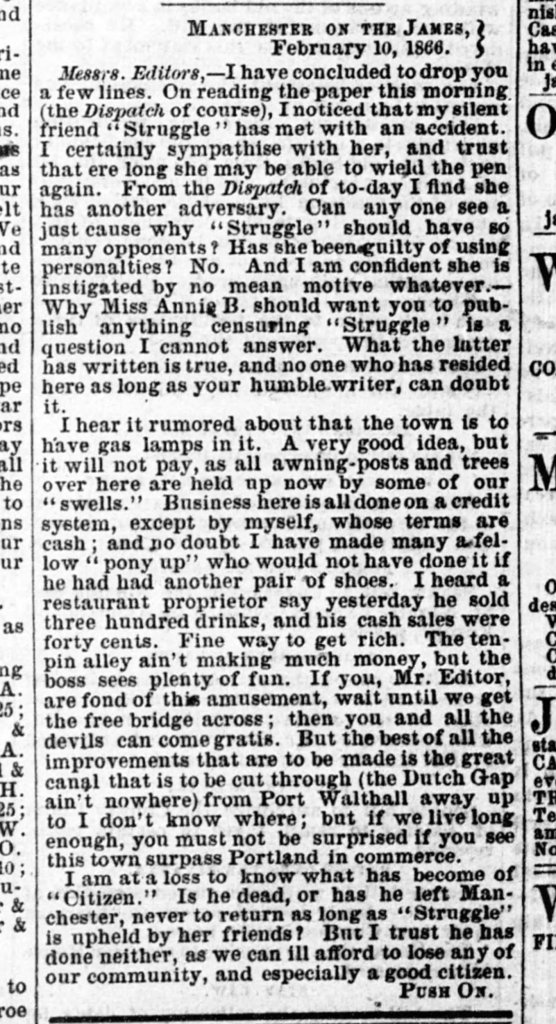
Some citizens did take notice of the harsh conditions in this section of town. In 1867, Reverend William E. Hatcher of the Baptist Church, now known as Bainbridge Street Baptist, wrote a series of letters to the editor of the Richmond Dispatch. Possibly to maximize the emotional impact of the letters and thereby bring attention to the issue, Hatcher wrote under the pen name “Struggle,” and created the fictional persona of a young woman who worked in the factories. A letter published January 27, 1866 began, “Mr. Editor, I am nothing but an humble factory girl, but a mighty ambition struggles in my soul. From my girlhood I have felt a desire to be on a newspaper; there is grandeur about it immensely.” Subsequent “Struggle” letters decried the conditions factory workers faced in Manchester, referring to “men who live on air, not having any visible means of support; men who sleep on street corners, and around barrooms, getting home late at night and getting up late in the morning and speaking insultingly to girls as they passed.”According to a nostalgic Richmond Times-Dispatch article published in the 1930s, Rev. Hatcher’s “Struggle” hoax “Raised the Ire of Old Manchester and Swept Reform Party into Power.”Hatcher’s letter writing campaign was apparently quite successful in changing Manchester’s image. The Dispatch article states that “[Manchester] became dissatisfied with itself and began to brush up.” In fact, “Struggle” received at least one marriage proposal from a local admirer. Rev. Hatcher, however, had other ideas. He later became the founder of Fork Union Military Academy, and is buried in Richmond in Hollywood Cemetery.
 ManchesterRVA