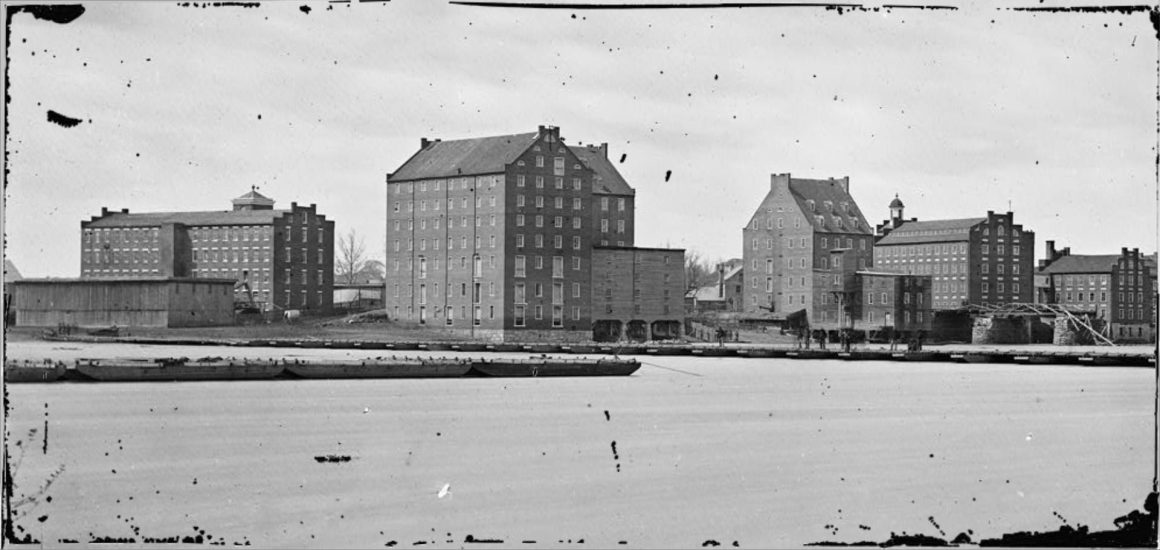
By the early nineteenth century, the streets of Manchester had been laid out in a grid pattern that remains in use today. The east to west streets were named after War of 1812 naval heroes and were named Decatur, Hull, Bainbridge, Porter, Perry, and McDonough. The north to south streets, now numbered, were called Harrison (14th), Jones (13th), Lawrence (12th), Warrenton (11th), Blakely, Burrows, Allen, Barney, Biddle, Jackson, Summers, Wadsworth, Ludlow, & Reid.
The area between the modern Mayo Bridge and Interstate 95 overpass was the ‘Manchester common,’ a large field where livestock owners would allow their cattle to graze. Often left unattended, dogs, cows, pigs, mules, and other livestock wandered the streets of lower Manchester. As a result the streets were often filthy. To solve the crisis, the city’s trustees passed a number of ordinances in 1817 regulating the construction of ‘necessaries’ to eliminate waste and manure in the streets. Despite these efforts, by the mid-nineteenth century, Manchester had earned the nickname ‘Dogtown.’
The exact origin of Manchester’s sobriquet is unclear. Another theory is that it came from the taverns that stood between Eleventh and Twelfth Streets, including a hostelry opened in 1794 by a ‘Mrs. Barbara Leath.’ According to an advertisement in The Virginia Gazette from that year, Leath inherited her husband’s tavern after his passing, and wanted guests to know that at her new establishment, “Good accommodations and every suitable need will be strictly attended to.” Other taverns soon appeared, as well.
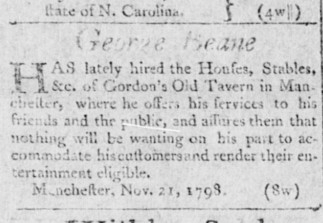
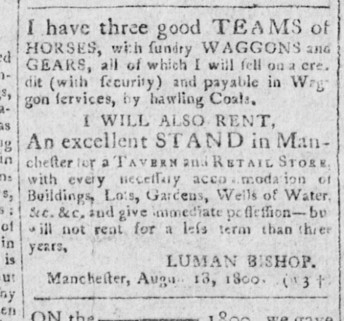
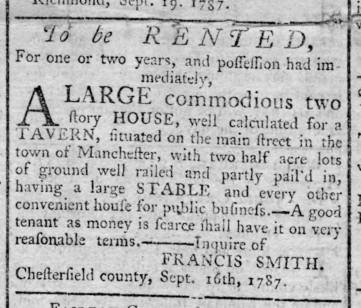
The area soon became notable for drunkenness, fistfights, and violence, suggesting that the name ‘Dogtown’ had an unsavory origin. Still, Manchester became a major thoroughfare for travelers on the Richmond and Petersburg Turnpike, due to the prevalence of hostels and other lodging establishments. By the twentieth century, however, most of the original buildings were gone.
 ManchesterRVA