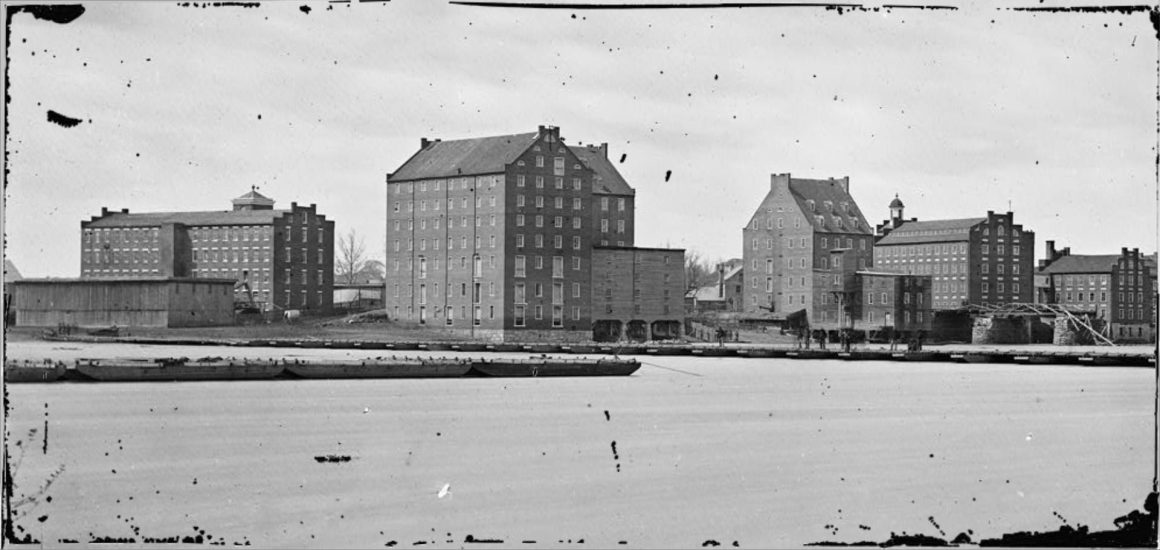
Throughout the late nineteenth century, debates regarding consolidation with Richmond became frequent in Manchester, and the citizens of both cities sent several proposals to the General Assembly. At the time, a toll bridge provided the main connection between the two cities, and many citizens of working-class Manchester resented having to pay the toll to travel to work each day. Taxes were also higher in Manchester than in neighboring Richmond. Access to public works and utilities was another issue. By 1910, Richmond had become the driving force seeking consolidation. On August 15th, 1910, the Manchester Board of Aldermen passed a resolution outlining the terms under which such a union may occur. The two cities agreed that Manchester should become a part of Richmond, and that Richmond would build a new, toll-free bridge Mayo Bridge at Fourteenth Street (the modern bridge), and that approximately forty percent of the taxes collection in Manchester were to be spent on street improvements and other infrastructure upgrades.
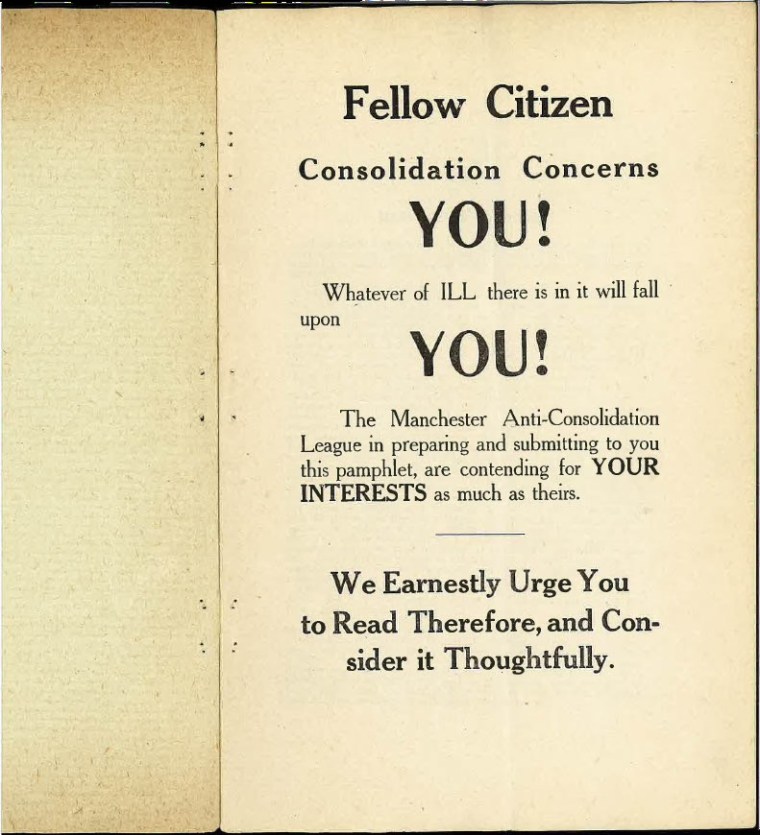
By 1910, Manchester was heavily in debt and could not afford to pay its loans and provide utilities for residents or meet its commitments to building a free bridge. Concerned that Richmond would profit by absorbing Manchester, residents formed the Manchester Anti-Consolidation League and circulated a pamphlet proclaiming consolidation “a snare and a delusion for the citizen.” The League noted the city’s growth and claimed that Richmond had rejected consolidation in the past and was now seeking to profit from annexation. The pamphlet appealed to people’s “local pride and public spirit,” to vote against consolidation in favor of “the soul… which animates and inspires the body politic” among other impassioned cries.
In response to the claims promoted by the Anti-Consolidation League, citizens former the Consolidation Committee and published their own circular refuting many of the claims against consolidation. Taxes were a major issue driving consolidation. Another was the need for a free bridge connecting Fourteenth Street in Shockoe Bottom with Hull Street in Manchester. The pamphlet ‘Consolidation Facts’ claimed that Richmond would begin work on a bridge ‘within one year of consolidation and pushed to completion.’
Richmond was in a better position to build the bridge, the Committee claimed, because the city ‘already had an option on the present Mayo’s Bridge and site.’ The modern Mayo’s Bridge, a concrete structure, opened in 1926, replacing nine wooden toll bridges that existed before it. The other structures were destroyed either by floods or by fire.
 ManchesterRVA